




RankRatingMinimumBBBKey FeaturesAction
1
Augusta Precious Metals
Best Overall
4.9/5
$50,000A+
  • Lifetime Support
  • Price Match Guarantee
  • Free Gold IRA Kit
2
Goldco
Best Buyback
4.8/5
$25,000A+
  • A+ BBB Rating
  • Excellent Reviews
  • White Glove Service
3
American Hartford Gold
Best for Beginners
4.7/5
$10,000A+
  • Low Minimum
  • Fast Setup
  • Price Protection
4
Birch Gold Group
Most Experience
4.6/5
$10,000A+
  • 20+ Years Experience
  • Educational Resources
  • Diverse Options
5
Noble Gold
Royal Survival Packs
4.5/5
$20,000A+
  • Texas Depository
  • No Quibble Policy
  • IRA Specialists
Visit Website

What Are Gold IRA Services?

Gold IRA services coordinate three parties — a custodian, a dealer, and a depository — to hold physical gold, silver, platinum, and palladium inside a tax-advantaged individual retirement account (IRA). A self-directed IRA (SDIRA), also called a precious metals IRA, gives you direct ownership of IRS-approved bullion coins and bars stored at an approved depository.

Gold IRA services handle every step: opening your self-directed account, executing a tax-free rollover from your 401(k), purchasing IRA-eligible bullion, and coordinating depository storage through retirement — including required minimum distributions (RMDs) at age 73. Unlike standard IRAs holding stocks or mutual funds, a gold IRA requires a specialized custodian such as Equity Trust, STRATA Trust, or Kingdom Trust to administer the account under IRS rules.

Every legitimate gold IRA company coordinates: (1) a custodian who administers the account, (2) a dealer who sells IRS-eligible metals, and (3) a depository such as the Delaware Depository who stores them under IRS oversight.

Why Consider a Gold IRA in 2026?

A gold IRA makes sense in 2026 for investors who want an inflation hedge uncorrelated to equities — gold returned 27% in 2024 and 13% in 2025 while the S&P 500 traded sideways. Below are four data-backed reasons to consider one.

  • Inflation hedge and safe haven asset: Gold is a historically proven safe haven asset and store of value against fiat currency debasement. It outpaced inflation (CPI) over 20-year rolling periods in most macroeconomic environments.
  • Low correlation to stocks: During the S&P 500 drawdowns of 2020 and 2022, gold held value or appreciated while equities fell sharply — genuine portfolio diversification.
  • Portfolio diversification: A 5-15% allocation to physical metals can reduce overall portfolio volatility without sacrificing long-term returns.
  • Tax advantages preserved: A properly structured gold IRA maintains the same tax-deferred (Traditional) or tax-free (Roth) growth as any other IRA.

Important caveat: Physical metals produce no income. Gold IRA services best suit investors who already hold core stock/bond exposure, carry a 10+ year horizon, and treat metals as a hedge — not a growth engine.

Gold IRA Investment Guide

How Gold IRA Services Work: 5-Step Process

Opening a gold IRA takes 5 steps and typically 7–14 business days: pick a custodian, fund via rollover, select IRS-eligible metals, arrange depository storage, and monitor/distribute.

  1. Choose a custodian and company: Select a self-directed IRA custodian specializing in precious metals — such as Equity Trust, STRATA Trust, or Kingdom Trust. Look for BBB A+ ratings, transparent fee disclosures, and at least 8 years in business.
  2. Fund the account via rollover or transfer: A direct trustee-to-trustee transfer from an existing IRA is penalty-free and tax-free, with no 60-day deadline. An indirect rollover gives you 60 days to redeposit funds before taxes and penalties apply. Important: the one-rollover-per-year rule limits IRA-to-IRA indirect rollovers to one per 12-month period. The 60-day rollover rule applies only to indirect rollovers — direct transfers are unlimited and have no deadline risk.
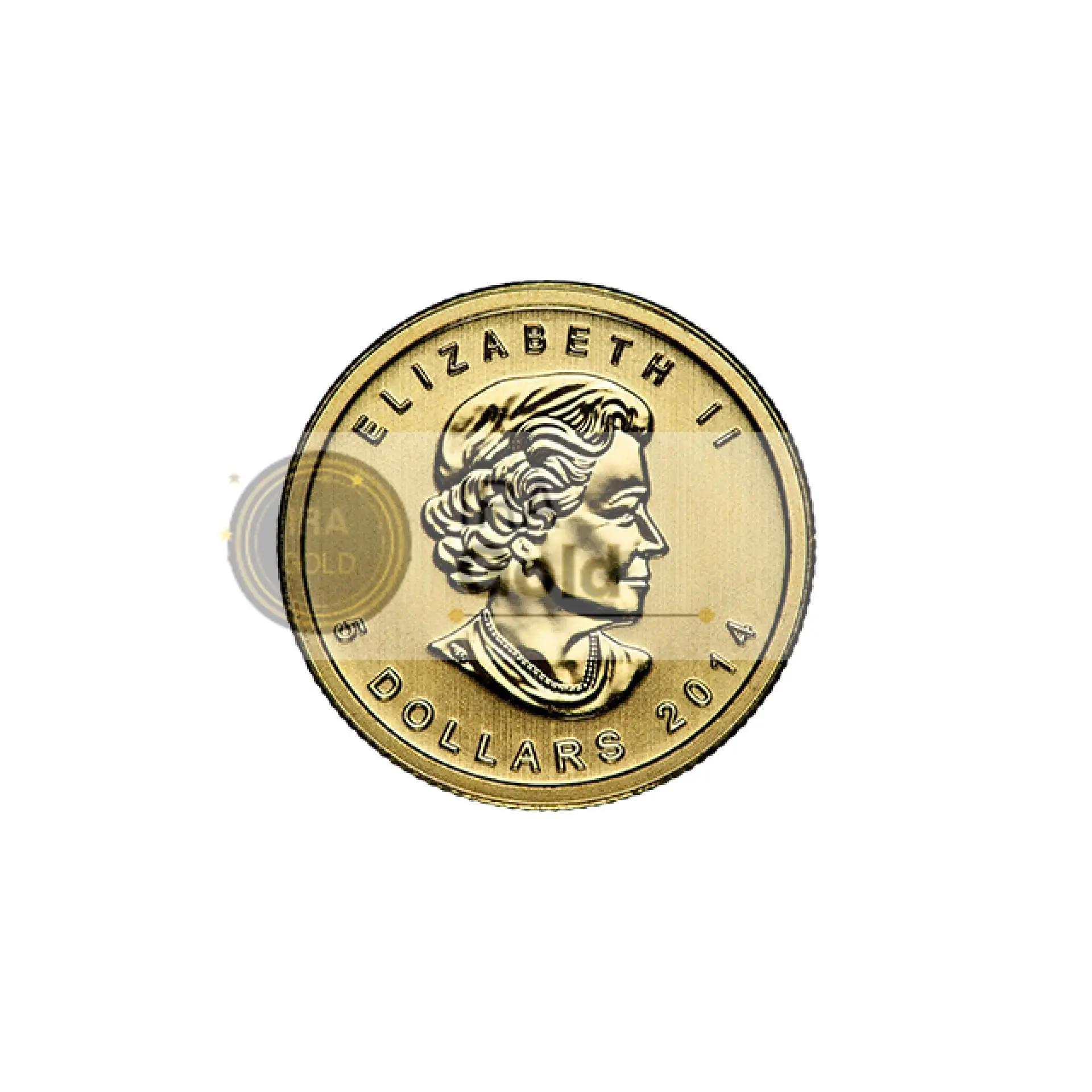
  3. Select IRS-eligible metals: Choose products meeting IRS minimum fineness: gold (0.995+), silver (0.999+), platinum and palladium (0.9995+). Popular IRA-eligible bullion: American Gold Eagles, Canadian Maple Leafs, LBMA-accredited gold bars, American Silver Eagles. Note: numismatic coins and proof coins generally do not qualify as IRA-eligible unless they meet fineness standards (American Gold Eagle proof coins are an exception).
  4. Arrange IRS-approved depository storage: IRS rules prohibit home storage. Metals ship directly to an IRS-approved depository. Segregated storage keeps your specific coins/bars separate; commingled storage is pooled but lower-cost. Ask about depository insurance — most major depositories carry Lloyd's of London coverage.
  5. Monitor, rebalance, and plan distributions: Review quarterly statements. Traditional gold IRAs require RMDs at age 73 (SECURE 2.0). An in-kind distribution lets you take physical metals rather than cash — your custodian arranges delivery.

Gold IRA Fees: What You Will Actually Pay

Gold IRA services charge four fee categories — setup, annual admin, storage, and dealer premium over spot price — that together determine 80% of your 10-year cost difference between providers. Here is a transparent breakdown:

  • Account setup: $0–$250 (many top companies waive this)
  • Annual administration (custodian fees): $75–$300/yr; often $80–$180 for established firms
  • Storage fees — commingled: $100–$150/yr flat rate at most major depositories
  • Storage fees — segregated: $125–$300/yr for your specific coins/bars stored separately
  • Dealer premium over spot: 3%–8% over current spot price (coins carry higher premiums than bars due to production costs)
  • Wire/Transaction fees: $0–$50 per transaction

Total annual cost estimate: For a $50,000 account, expect $175–$450/year in administration and storage fees, plus one-time dealer premiums at purchase. Over 10 years, fees of $300/year represent about 0.6% annually — comparable to many active mutual fund expense ratios.

Red flags: Avoid companies that refuse a written fee schedule or charge percentage-based storage fees that scale indefinitely with account value.

Gold IRA Investment Guide

IRS Rules for Gold IRA Services: What You Must Know

Compliance is non-negotiable. Violations can trigger taxes, penalties, and loss of tax-advantaged status.

  • Minimum fineness (IRA-eligible bullion): Gold must be 99.5% pure (0.995); silver 99.9% (0.999); platinum and palladium 99.95% (0.9995). American Gold Eagle coins are an IRS-approved exception despite being 91.67% gold. LBMA-accredited refiners (PAMP Suisse, Valcambi, Credit Suisse) produce IRS-eligible bars. Sovereign coins (Canadian Maple Leaf, Austrian Philharmonic, Australian Kangaroo) meet fineness requirements and are approved.
  • IRS-approved depository required: All metals must be stored at an IRS-approved depository (e.g., Delaware Depository, Brinks, IDS of Texas). Home storage violates IRC §408(m) and triggers full account value as a taxable distribution.
  • Rollover rules: The 60-day rollover rule requires re-depositing indirect rollover funds within 60 days. The one-rollover-per-year rule limits IRA-to-IRA rollovers to one per 12-month period. Direct trustee-to-trustee transfers have no such limits.
  • Prohibited transactions and UBIT: Transacting with disqualified persons (yourself, your family) violates IRC §4975. Certain IRA investments can trigger Unrelated Business Income Tax (UBIT) — not typical for physical bullion but relevant for some metals ETF structures held in IRAs.
  • Roth conversion option: You can convert a traditional gold IRA to a Roth gold IRA via a Roth conversion — you pay ordinary income tax on the converted amount now, but future growth and qualified distributions are tax-free.
  • In-kind distribution: At retirement, you can request an in-kind distribution — taking physical metals instead of selling them for cash. Your custodian arranges shipment. The fair market value on distribution date is taxable income (Traditional IRA).
  • Required minimum distributions: Traditional gold IRAs require RMDs starting at age 73 under SECURE 2.0 Act (2022).
  • Contribution limits: $7,000/year in 2026 ($8,000 if age 50+). Most investors fund via rollover — no annual contribution limit applies to rollovers.

Sources: IRS Publication 590-A, IRS Publication 590-B, IRC §408(m)(3), SECURE 2.0 Act (H.R.2617, 2022).

Best Gold IRA Services Companies: 2026 Rankings

Based on our methodology (BBB rating 20%, fee transparency 20%, minimum investment 15%, storage options 15%, buyback guarantee 15%, verified reviews 10%, educational resources 5%), here are the top gold IRA services providers for 2026:

  1. Augusta Precious Metals — Best Overall (4.9/5): A+ BBB, $50,000 minimum, lifetime customer support, price-match guarantee. Strongest educational program in the industry. Ideal for investors with $50K+ who want a premium, hands-on experience.
  2. Goldco — Best Buyback Guarantee (4.8/5): A+ BBB, $25,000 minimum, 16+ years in business. Goldco Precious Metals IRA Buyback Guarantee locks in a minimum buy price. Strong white-glove service and consistent 5-star Trustpilot reviews from 5,000+ clients.
  3. American Hartford Gold — Best for Beginners (4.7/5): A+ BBB, $10,000 minimum, no first-year fees for qualifying accounts. Best choice for first-time precious metals IRA investors with smaller account sizes.
  4. Birch Gold Group — Most Experience (4.6/5): A+ BBB, $10,000 minimum, 20+ years in business. Broadest product selection and assigns a dedicated precious metals specialist to every client.
  5. Noble Gold — Best Texas Storage (4.5/5): A+ BBB, $20,000 minimum, 8+ years. Unique in offering storage at the Texas Precious Metals Depository. Royal Survival Packs available for investors who want some metals in personal possession.
  6. Rosland Capital — Best for International Coins (4.3/5): A BBB, $5,000 minimum, 15+ years. Broad selection of sovereign coins and IRA-eligible bullion. Good entry point for smaller initial investments.
  7. Advantage Gold — Best First-Time Buyer Education (4.3/5): A+ BBB, $10,000 minimum. Strong focus on investor education and transparent onboarding. Consistent 5-star Google reviews.
  8. Oxford Gold Group — Best Portfolio Diversification (4.2/5): A+ BBB, $7,500 minimum. Offers gold, silver, platinum, and palladium IRAs. Strong IRA rollover process and responsive customer service.
  9. Lear Capital — Best Established Track Record (4.2/5): A BBB, $7,500 minimum, 25+ years in business. One of the longest-operating gold IRA companies. Useful metals price alerts and portfolio tracker tools.
  10. Patriot Gold Group — Best Price Transparency (4.1/5): AAA BCA, $25,000 minimum. Offers dealer-direct pricing with no middleman markup. Competitive fee structure for larger accounts.
Gold IRA Investment Guide

Gold IRA Services: Pros and Cons

Advantages

  • Proven inflation hedge and safe haven asset over multi-decade periods
  • Low correlation to stocks and bonds — genuine diversification against fiat currency risk
  • Tax-deferred or tax-free growth (same as any IRA); Roth conversion option available
  • Physical ownership of a globally recognized hard asset with Lloyd's of London depository insurance
  • Protection from counterparty risk unlike paper assets
  • Penalty-free rollover from existing 401(k)/IRA via trustee-to-trustee transfer

Disadvantages

  • No dividends, interest, or income generated
  • Annual fees ($175–$450/yr) reduce net returns vs. low-cost gold ETFs (GLD, IAU)
  • Dealer premiums 3–8% over spot price on purchase
  • Less liquid than stocks — selling IRA metals takes 3–5 business days
  • Price volatility: gold dropped 28% in 2013, 6% in 2021
  • RMDs at age 73 may force in-kind distribution or liquidation at unfavorable prices

Bottom line: Gold IRA services best suit investors who already hold core stock/bond exposure, carry a 10+ year horizon, and treat metals as a hedge — not a growth engine. A 5–15% allocation is the commonly cited starting point.

What If You Had Invested $1,000 in Gold 10 Years Ago?

$1,000 invested in gold in April 2016 (at approximately $1,230/oz) is worth approximately $2,520 in April 2026 (at approximately $3,100/oz) — a 152% return that beat inflation (33%) but trailed the S&P 500's 220% total return with dividends reinvested.

For comparison over the same decade: S&P 500 grew to approximately $3,200 (+220% total return) — outperforming gold significantly in a bull equity market. 10-Year Treasury returned approximately +20–40% including coupon payments. Inflation (CPI): $1,000 in 2016 required approximately $1,330 by 2026 — gold at $2,520 preserved real purchasing power by a wide margin.

Gold's strongest relative performance came during equity dislocations: +25% during the 2020 COVID crash (when equities fell 34%), and +18% in 2022 (when the S&P 500 fell 18%). This is the core case for gold IRA services: portfolio insurance that pays off precisely when equity portfolios hurt most.

Key takeaway: Gold outpaced inflation by 4.5x over the past decade but underperformed equities in the bull market years. Gold's proposition is strongest during equity bear markets and inflationary periods — it serves as a safe haven asset and hedge, not a primary growth engine.

Gold IRA Investment Guide

Gold IRA vs. Buying Physical Gold: Which Is Better?

BLUF: A gold IRA offers tax-deferred growth and IRS-compliant storage; direct physical gold ownership offers full personal custody but no tax advantage. Neither is universally better — the right choice depends on your retirement timeline, tax situation, and storage preferences.

FactorGold IRAPhysical Gold (Personal)Gold ETF (GLD/IAU)
Tax treatmentTax-deferred (Traditional) or tax-free (Roth)28% collectibles capital gains tax rate28% collectibles rate (physically-backed) or 20% long-term rate
StorageIRS-approved depository required; Lloyd's of London insuranceHome safe or bank safe deposit box (your responsibility)No physical custody — shares in a fund
Annual fees$175–$450/yr (admin + storage)Safe deposit box $25–$200/yr or home safe cost0.25%–0.40% expense ratio (e.g., GLD = 0.40%, IAU = 0.25%)
Liquidity3–5 business days to liquidateInstant cash sale or days at dealerInstant (trades on NYSE like a stock)
Retirement advantagesFull IRA tax benefits; rollover from 401(k) penalty-freeNoneCan hold in standard IRA (e.g., Fidelity) for tax deferral
Best forRetirement savers wanting tax-advantaged physical ownershipInvestors wanting immediate personal access and controlInvestors wanting gold exposure without custody hassle

Verdict: For retirement accounts, a gold IRA wins on tax efficiency. For non-retirement savings, physical gold or a low-cost ETF (IAU at 0.25%) may be simpler and more liquid.

Does Fidelity Offer a Gold IRA?

No — Fidelity does not offer a self-directed gold IRA holding physical bullion. Fidelity offers gold exposure through mutual funds and ETFs (e.g., FSAGX — Fidelity Select Gold Portfolio, GLD, IAU) inside standard IRAs, but it does not provide physical precious metals IRA services.

Here is what Fidelity offers vs. what a gold IRA provides:

  • Fidelity Gold Mutual Fund (FSAGX): Invests in gold mining stocks and some bullion ETFs. Expense ratio ~0.80%. Held in a standard Fidelity IRA. No physical metal ownership — you own shares in a fund, not gold bars.
  • Gold ETFs at Fidelity (GLD, IAU): Physically-backed ETFs tradeable in a Fidelity IRA. Low cost (IAU = 0.25%), high liquidity. Still no personal metal custody — the fund custodian holds the gold.
  • Self-directed Gold IRA (not at Fidelity): You own actual IRS-eligible bullion coins and bars stored in an approved depository. Requires a specialized custodian (Equity Trust, STRATA Trust). Available through Augusta, Goldco, American Hartford Gold, and others listed above.

Bottom line: Investors who want physical gold in a tax-advantaged account must use a specialized gold IRA company — Fidelity, Schwab, and Vanguard do not offer this service. If paper gold exposure in a low-cost IRA is acceptable, Fidelity's FSAGX or IAU in a Roth IRA is a practical alternative.

Gold IRA Investment Guide

How to Choose the Right Gold IRA Services Provider

Gold IRA services evaluate on seven criteria before you open an account:

  1. Verify BBB and BCA ratings: Look for A or A+ with BBB and AAA with Business Consumer Alliance. Check complaint history — complaint resolution pattern matters more than complaint count.
  2. Request a written fee schedule upfront: Any company that hesitates to provide itemized fees — setup, annual admin, storage (commingled vs. segregated), and dealer spread over spot price — before you open an account is a red flag.
  3. Confirm minimum investment against your budget: Range is $5,000 (Rosland Capital) to $50,000 (Augusta Precious Metals). Most top-tier companies start at $10,000.
  4. Ask about the depository and insurance: Delaware Depository is the industry gold standard. Brinks, IDS of Texas, and HSBC Bank USA are also IRS-approved. Confirm segregated vs. commingled storage and ask specifically about depository insurance coverage (Lloyd's of London policies are standard at top depositories).
  5. Evaluate buyback policy: Can you sell metals back to the company? Goldco's buyback guarantee is the industry benchmark — it locks in a minimum buy-back price.
  6. Test customer service before opening an account: Call and ask a specific question about the 60-day rollover rule or trustee-to-trustee transfer. Evaluate response quality and sales pressure.
  7. Check educational resources: Augusta Precious Metals and Birch Gold Group offer the most thorough educational programs. Strong educational programs signal companies that prioritize informed investors over fast sales.
Augusta Precious Metals

Special Offer from Augusta Precious Metals

View Details

View Details →

✓ No obligation ✓ 100% Free ✓ Ships in 24-48h

Frequently Asked Questions

What is the downside of a gold IRA?

The main downsides of a gold IRA are: (1) No income generation — physical gold, silver, platinum, and palladium pay no dividends or interest, so returns depend entirely on spot price appreciation. (2) Ongoing fees — you pay annual custodian administration fees ($75–$300/yr) and storage fees ($100–$300/yr) regardless of account performance. (3) Dealer premiums — you typically pay 3–8% over spot price when buying metals. (4) Liquidity constraints — selling IRA metals takes 3–5 business days. (5) RMD complications — traditional gold IRAs require minimum distributions at age 73 (SECURE 2.0), which may force metal sales or in-kind distributions at inopportune prices. (6) Compliance complexity — IRS rules on fineness, approved depositories, the 60-day rollover rule, and the one-rollover-per-year rule require careful attention. These disadvantages are manageable with proper planning, but they mean a gold IRA works best as a safe haven asset allocation within a diversified retirement strategy, not a standalone solution.

What is a gold IRA company?

A gold IRA company is a firm that helps investors open, fund, and manage a self-directed IRA (SDIRA) holding physical precious metals. Every legitimate gold IRA company coordinates three parties: (1) a custodian — a specialized IRA administrator such as Equity Trust or STRATA Trust who holds the account under IRS rules, (2) a dealer — the gold IRA company itself, who sources and sells IRS-eligible bullion coins and bars, and (3) a depository — an IRS-approved secure storage facility such as the Delaware Depository. The gold IRA company handles rollover coordination, metal selection guidance, depository arrangement, and ongoing account support. They earn revenue from dealer premiums over spot price and sometimes from referral fees with custodians. A complete gold IRA program includes: account setup, penalty-free rollover from your 401(k) or IRA, selection of IRA-eligible bullion, IRS-compliant storage, and RMD planning at retirement.

What are the fees for a gold IRA?

Gold IRA fees include four categories: (1) Account setup fee: $0–$250 (most top companies waive this). (2) Annual custodian administration fee: $75–$300 per year. (3) Storage fee — commingled: $100–$150 per year flat rate. (4) Storage fee — segregated: $125–$300 per year for your specific coins and bars stored separately. You also pay a dealer premium of 3–8% over the current spot price when purchasing metals — coins carry higher premiums than bars. Wire or transaction fees: $0–$50 per transaction. For a $50,000 gold IRA with a $150 annual admin fee, $125 storage fee, and 5% dealer premium at purchase, your first-year all-in cost is approximately $1,525 (including $1,250 dealer premium). Annual holding costs in subsequent years drop to approximately $275. Always request a complete written fee schedule — including the custodian fees vs. storage fees breakdown — before opening an account.

What if I invested $1,000 in gold 10 years ago?

$1,000 invested in gold in April 2016 (at approximately $1,230/oz) is worth approximately $2,520 in April 2026 (at approximately $3,100/oz) — a 152% return, or about 9.7% annualized. The S&P 500 returned approximately 220% with dividends reinvested over the same period, outperforming gold in this bull equity decade. Inflation (CPI) rose about 33% — meaning gold significantly outpaced inflation and preserved real purchasing power. Gold's strongest performance came during equity bear markets: +25% in 2020 (when equities fell 34%), +18% in 2022 (when the S&P 500 fell 18%). This is why financial advisors typically recommend a 5–15% gold allocation as portfolio insurance — a safe haven asset that tends to outperform most strongly when equity portfolios are under the most stress.

What is the most reputable gold IRA company?

Based on independent analysis of BBB ratings, Trustpilot and Google verified customer reviews, fee transparency, buyback policies, and educational quality, Augusta Precious Metals consistently ranks as the most reputable gold IRA company for high-balance investors ($50,000+). For lower minimums and beginners, American Hartford Gold and Birch Gold Group earn top marks with $10,000 minimums. Goldco leads in buyback guarantees, making it best for investors who prioritize exit options. The most reputable gold IRA services providers share these traits: A+ BBB rating with clean complaint history, transparent written fee schedules including custodian fees vs. storage fees, IRS-compliant depository partnerships with Lloyd's of London insurance, active educational programs, and responsive customer support.

How much does it cost to open a gold IRA?

Opening a gold IRA typically costs $0–$250 for account setup (many companies waive this), plus your initial metal purchase at spot price plus a 3–8% dealer premium. Most companies require a minimum investment of $10,000–$50,000. Ongoing annual costs: administration fee ($75–$300/yr) and storage fee ($100–$300/yr). For a $25,000 gold IRA with a $150 annual admin fee, $125 storage fee, and 5% dealer premium ($1,250 at purchase), your first-year all-in cost is approximately $1,775. In subsequent years, the annual holding cost drops to approximately $275. Request itemized quotes — including the full custodian fees vs. storage fees breakdown — from multiple companies before committing.

Can I do a gold IRA rollover from my 401(k)?

Yes. Rolling over a 401(k) to a gold IRA is one of the most common ways to fund a precious metals IRA. A direct trustee-to-trustee transfer has your 401(k) plan send funds directly to the new IRA custodian — no taxes withheld, no 60-day deadline risk, no limit on frequency. An indirect rollover has the 401(k) send a check to you; you must redeposit it into the new IRA within 60 days (the 60-day rollover rule) or face taxes and a 10% early withdrawal penalty. Your plan withholds 20% for taxes on indirect rollovers, which you must replace with personal funds. The one-rollover-per-year rule limits IRA-to-IRA indirect rollovers — direct transfers are unlimited. Most gold IRA companies handle all rollover paperwork at no charge.

What are IRS-approved gold IRA metals?

The IRS approves specific IRA-eligible bullion under IRC §408(m)(3). Gold must have minimum fineness of 0.995 (99.5% pure). Silver must be 0.999 (99.9% pure). Platinum and palladium must each be 0.9995 (99.95% pure). Approved gold coins: American Gold Eagle (exception: IRS-approved despite 22-karat), American Gold Buffalo (24-karat, 0.9999), Canadian Gold Maple Leaf (0.9999), Australian Gold Kangaroo, Austrian Gold Philharmonic — all are sovereign coins meeting fineness standards. Approved gold bars: any 0.9999 fine bar from an LBMA-accredited refiner (PAMP Suisse, Credit Suisse, Valcambi, Perth Mint). Numismatic coins and proof coins generally do not qualify unless they meet fineness requirements and are not valued primarily for rarity. Always confirm eligibility with your custodian before purchasing.

What Our Readers Say

Robert M.
Robert M.
Austin, TX
★ ★ ★ ★ ★

I rolled over my 401(k) into a gold IRA through Augusta and the entire process took about 2 weeks. The educational webinar they require before opening the account was genuinely useful. No sales pressure at all.

February 2026
David L.
David L.
Scottsdale, AZ
★ ★ ★ ★ ★

American Hartford Gold was perfect for my situation. I only had $15,000 to start and they were completely transparent about fees upfront. My account specialist walked me through every step. The metals arrived at the Delaware Depository within 10 days of funding.

January 2026
David K.
David K.
Denver, CO
★ ★ ★ ★ ★

I compared four companies before choosing Goldco. The deciding factor was their buyback guarantee. Three years in and I have had zero issues. My account is up about 40%.

March 2026
Sandra W.
Sandra W.
Nashville, TN
★ ★ ★ ★ ☆

Birch Gold Group assigned me a dedicated specialist who has been with me for two years. They helped me diversify across gold AND silver. My only criticism: the initial paperwork took about 3 weeks to complete.

December 2025